
Value Creation in Today’s Workforce
- May 13, 2026
- Posted by: CKH Group
- Category: Blog

“Losing the Will to Work?” How value creation stands out in a changing work environment
Harry Catrikilis discusses the Wall Street Journal article “America Loses Its Will to Work” and what this means for professionals and businesses. He highlights how shifting attitudes towards work can present an opportunity for those focused on value creation.
“As I’ve said previously, I approach articles that come across my digital front page with a hesitant wariness. In the past, when you picked up a newspaper, everyone read the same version. Today, content is often curated based on individual preferences (i.e. ‘the algorithm’), which can reinforce existing viewpoints rather than challenge them.
It is something I try to stay aware of, so I again approach with caution as I talk about The Wall Street Journal article that I came across titled “America Loses Its Will to Work” by Barton Swaim.
Between passing the baton to the younger generation, the rise of today’s technological changes, and what I’ve observed firsthand, it’s easy to get hit with worries that perhaps today’s generation isn’t as prepared to work hard in the way I did when I was young. This title alone struck a chord with these thoughts, and the piece raises broader questions about how attitudes toward work may be shifting in the U.S.
Swaim writes that “we’ve stopped appreciating the value of honest labor” and suggests that many Americans today show “a deep confusion about the nature and purpose of work.” He also points to trends frequently discussed like “quiet quitting,” and the evolving expectations around work-life balance. He also points out the growing normalization of income streams that he dubs “money for nothing,” giving examples like the rise of sports betting and unscrupulous personal injury claims.
Reading this, it is easy to have an immediate reaction. For business owners especially, there can be a concern that it is becoming more difficult to find and retain people who are willing to put in sustained effort over time. That concern is not new, and in many ways, every generation has expressed some version of “young people don’t want to work anymore”. Taken at face value, the whole article can read as a pessimistic outlook of the future of businesses.
But here is the arbitrage.
If, as Swaim says, fewer people are willing to work hard or stay consistent, that creates an opportunity for those who are willing to do so to stand out and benefit.
Which brings me back to what I would have thought in my younger days; this shift is just an advantage for people who are willing to bring effort. For the younger generation reading Swaim’s article and thinking “that’s not me,” that’s exactly the point- you’re not the baseline, and that creates an opportunity to stand out.
Historically, one of the defining characteristics of the U.S. economy has been the ability to create wealth through effort and value creation. That principle still holds. Whether in professional services, construction, trades, or entrepreneurship, the link between contributing something meaningful and generating income remains intact.
So, while expectations around work have changed, it does not necessarily mean the value of work itself has diminished. But there are now gaps between those who are willing to consistently show up, improve, and take ownership, and those who are not. From a business perspective, companies that build strong cultures around accountability and value creation may find that these qualities stand out more clearly than ever before.
At CKH Group, we have seen firsthand that clients respond to consistency, effort, and a clear commitment to delivering value. When clients come to us and say “you are different”, it comes from one of our key values- the golden rule to treat our customers the way we’d want to be treated. That’s why we call ourselves ‘the Atlanta CPA firm that treats your business like it’s our own.’ We maintain the work ethic and continue to hire people who understand this culture.
Articles like Swaim’s are designed to provoke discussion, and they do. Whether or not one agrees with him, his conclusions highlight a real conversation happening around work, expectations, and value. While it may confirm worries, it also highlights the best path forward for businesses who are unshaken in their efforts to create value.” -Harry Catrakilis
The above article only intends to provide general information and reflection. It is not designed to provide specific advice or recommendations for any individual. It does not give personalized tax, financial, or other business and professional advice. Before taking any form of action, you should consult a financial professional who understands your particular situation. CKH Group will not be held liable for any harm/errors/claims arising from the blog. Whilst every effort has been taken to ensure the accuracy of the contents, we will not be held accountable for any changes that are beyond our control.
About the Author
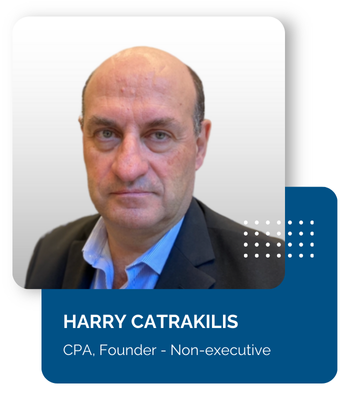
Harry Catrakilis has over 30 years of experience in the practice of public accounting, corporate financial management, and investment banking. He was managing partner of CKH from 2003 until summer of 2018 when main operations were passed on to CEO. This blog was written by and is the candid reflections of Harry Catrakilis.